
Gladiator (2000) A Tale of Honor, Revenge, and Sacrifice
Gladiator tells the legendary story of Maximus Decimus Meridius, “the general who became a slave, the slave who became a gladiator, and the gladiator who defied an emperor.” It is a visceral, emotionally charged journey that explores the depths of human resilience and the corrupting nature of power. WATCH
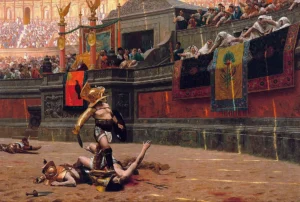
1. A Hero’s Fall and Rise
The film’s heart lies in the tragic transformation of Maximus, played with grit and soul by Russell Crowe. After being betrayed by the jealous Commodus and losing his wife and son to a brutal execution, Maximus is sold into slavery. His transition from a decorated Roman General to a champion of the Colosseum is fueled by a singular, burning desire: revenge. INSTAGRAM
2. The Duality of Characters
The film thrives on the contrast between its protagonist and antagonist:
Russell Crowe (Maximus): Crowe delivers a powerhouse performance as a man physically invincible but emotionally shattered. His longing for his family—seen in the ethereal, dream-like sequences of the afterlife—gives the film its “moving” and “spiritual” heart.
Joaquin Phoenix (Commodus): Phoenix is chillingly effective. He portrays Commodus not as a cartoon villain, but as a deeply insecure, daddy-issue-riddled tyrant. He is the “bad twin” to Maximus, seeking the love and glory that Maximus received effortlessly. FaceBook
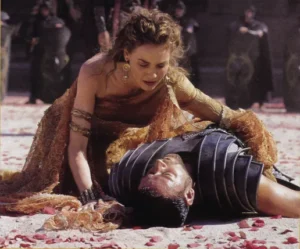
3. Strength in the Shadows: Lucilla
Connie Nielsen’s Lucilla provides a crucial female perspective. She is a clever, high-stakes player in a dangerous political game. Her primary motivation is the safety of her son, Lucius, making her a silent pillar of strength. Her final speech at the end—often debated by critics—serves as the perfect emotional coda, forcing the audience to reflect on the heavy price of Maximus’s sacrifice for the “dream that was Rome.”
4. Technical Grandeur
The Score: Hans Zimmer and Lisa Gerrard created an ethereal and haunting soundtrack. The use of vocals and ancient-sounding instrumentation elevates the film from a standard action flick to a poetic experience.
Direction: Ridley Scott’s vision of Ancient Rome is unparalleled. Unlike modern CGI-heavy spectacles, Gladiator feels grounded and gritty. The battle scenes are brutal, yet the quiet moments in the wheat fields are breathtakingly beautiful.
The Verdict
“Gladiator remains the gold standard for historical epics. It balances blood-soaked action with a deeply personal story of grief and redemption.”
| Pros | Cons |
| Acting: Career-best performances by Crowe and Phoenix. | Historical Accuracy: Takes significant liberties with Roman history. |
| Emotion: An unexpectedly tear-jerking ending. | Length: At over 2.5 hours, it requires a dedicated sitting. |
| Legacy: Outshines modern attempts at the genre. |